NBRDA launches national genomics infrastructure to drive precision medicine
The National Biotechnology Research and Development Agency (NBRDA) has launched a National Genomics and Bioinformatics Data Generation, Repository, and Management Infrastructure aimed at advancing precision medicine, strengthening food security, and positioning the country as a key player in the global bioeconomy.
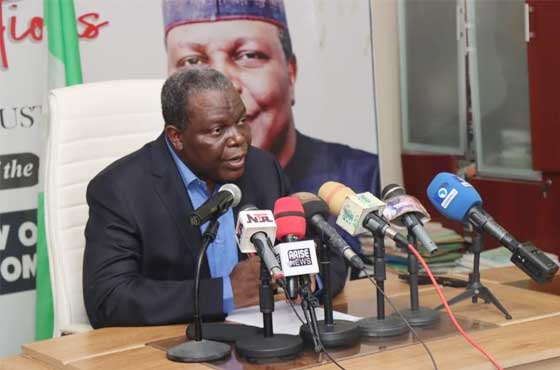
The Director-General and Chief Executive Officer of the agency, Prof. Abdullahi Mustapha, announced the initiative on Wednesday during a press briefing at the agency’s headquarters in Lugbe, Abuja.
Mustapha said the infrastructure would establish a sovereign genomic database to capture Nigeria’s vast genetic diversity across humans, plants, animals, and microorganisms, while supporting innovation in healthcare, agriculture, industrial biotechnology, and environmental sustainability.
According to him, more than 80 per cent of genomic data currently in global use is derived from non-African populations, creating gaps in research and medical solutions tailored to Africans.
“Nigeria, as the most populous Black nation, possesses vast and largely untapped genetic diversity across humans, plants, animals and microorganisms. Unlocking this resource is not only a scientific necessity but an economic imperative,” he said.
He noted that the initiative aligns with the Renewed Hope Agenda of President Bola Ahmed Tinubu in areas including economic diversification, digital innovation, healthcare transformation, and sustainable development.
Mustapha explained that the project would support the Nigeria Biogenomes Project and help Nigeria transition from being a consumer of foreign genomic data to a producer of globally relevant biological knowledge and solutions.
He said the infrastructure would enable precision medicine by supporting the development of drugs tailored to the genetic makeup of Nigerians instead of relying solely on imported medications developed from foreign genomic studies.
“All the drugs being imported into Nigeria are drugs based on the genomics of people from the countries where they were developed,” he said.
“This one is going to be precision medicine and personalised medicine, which means the drugs are going to work effectively for Nigerian people because they are designed based on our own genetic sequencing.”
Mustapha added that the initiative would improve early detection of diseases and pathogens, including future outbreaks similar to COVID-19, through enhanced genomic surveillance and bioinformatics capacity. In agriculture, he said the project would support precision farming by enabling the development of climate-resilient, disease-resistant, and high-yield crops and livestock.
“The farmer in the village will benefit because there is going to be precision agriculture,” Mustapha said.
“When the farmer has qualitative seeds that are climate-resilient, high-yielding and disease-resistant, productivity will improve.”
As part of efforts to drive implementation, the agency signed a Memorandum of Agreement with Basani Digital Innovations Limited to expand digital healthcare solutions, strengthen health data infrastructure, and accelerate biomedical research and commercialisation.
NBRDA also signed a Memorandum of Understanding with Indygeneus Bio Incorporated, an American biotechnology and BioFinTech company, to deploy advanced genomic and artificial intelligence platforms in Nigeria.
Mustapha said the collaborations would strengthen Nigeria’s capacity in genomic data generation, analytics, and biotechnology innovation while opening up opportunities for Nigerian science graduates in genomics, bioinformatics, computational biology, data science, and biotech entrepreneurship.
He described the initiative as the first of its kind in Nigeria, noting that only a few similar genomic data repositories currently exist in Africa, including in South Africa.
“This is the beginning and the opening of the eyes of Nigeria in terms of healthcare, agriculture and environment. This is going to position Nigeria globally,” he said.
On funding, Mustapha said the scale of Nigeria’s population and biodiversity meant the project would require long-term investment, adding that genomic data itself could become a major revenue-generating national asset.
“The data itself is going to generate huge revenue for Nigeria, not to talk of what we are going to use it for,” he said.